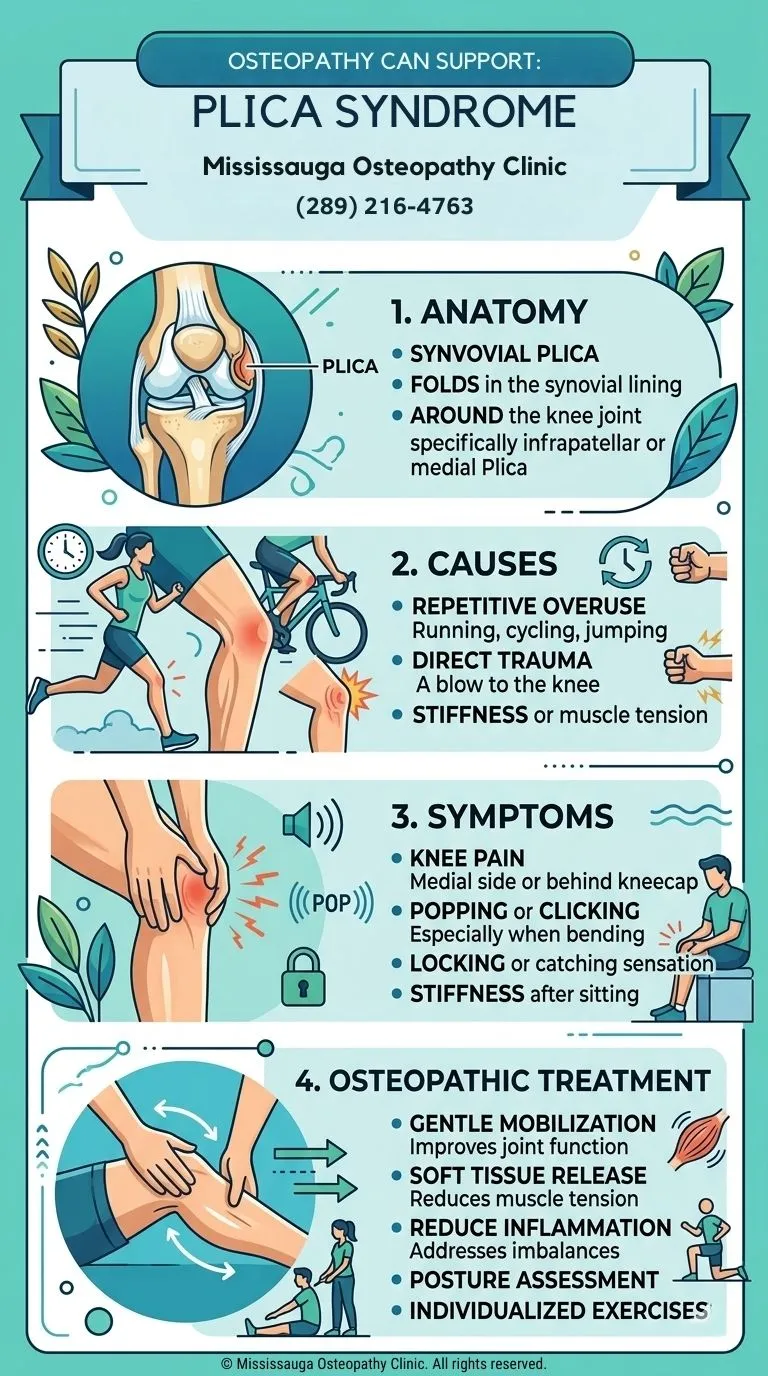
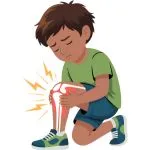
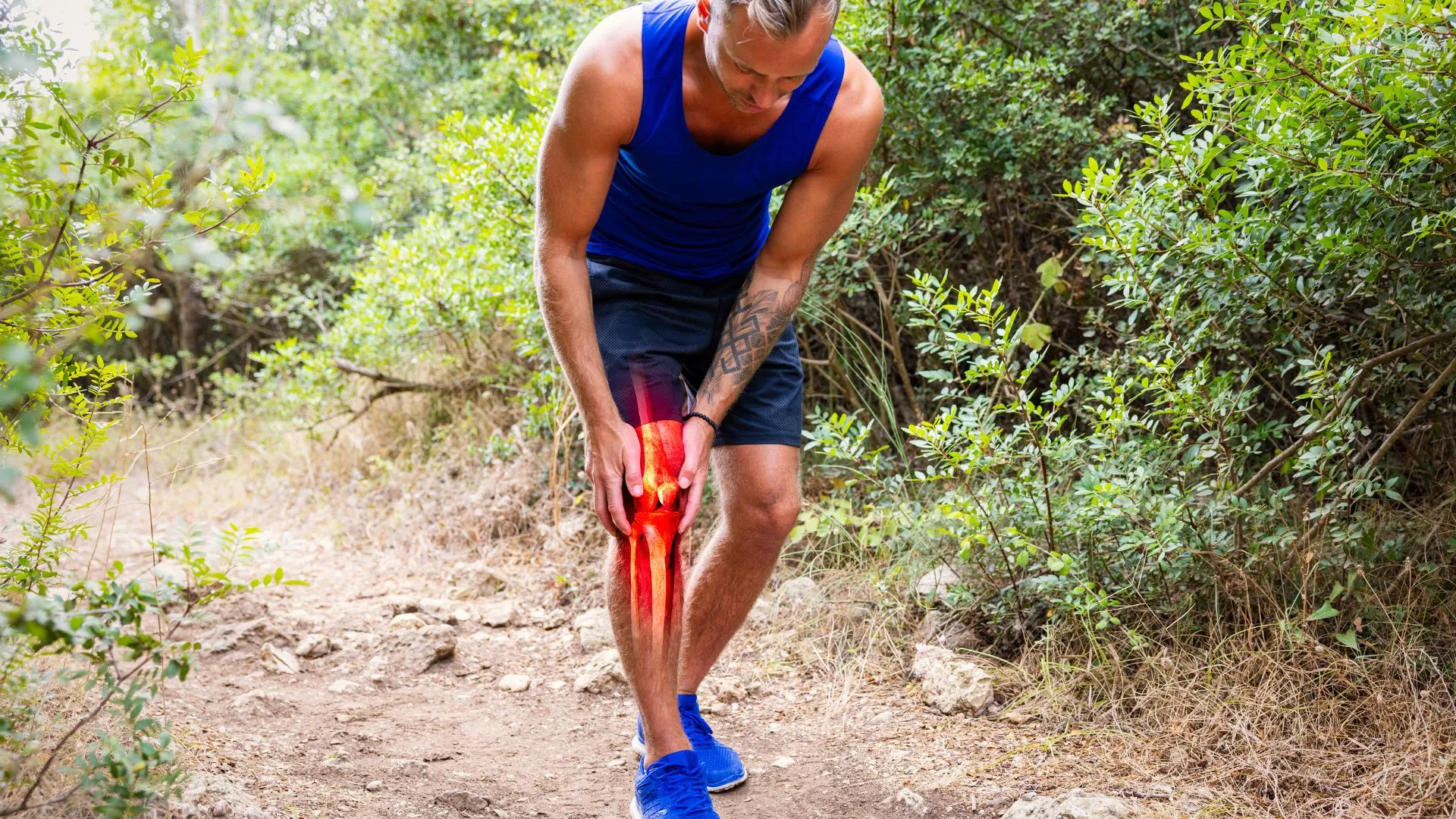
Plica syndrome occurs when a normal fold in the knee lining becomes irritated and starts causing knee pain. While diagnosis can sometimes be tricky, once identified, this condition can usually be treated effectively.
Mississauga Osteopathy Clinic | An Osteopathy approach for Pain Management

Osteopathy prioritizes your physical well-being, fostering mobility, pain relief, vitality, and overall happiness in Mississauga.
Our Quality Osteopathy in Mississauga Ontario provides expert care for a variety of musculoskeletal conditions, including knee problems such as plica syndrome. We focus on personalized, evidence-informed treatments to help you recover function, reduce pain, and regain confidence in your movement. With a holistic approach, we address the root cause of your knee pain and provide strategies to prevent recurrence. At our clinic, you are supported every step of the way, from diagnosis through rehabilitation.

Plica syndrome occurs when a normal fold in the knee lining becomes irritated and starts causing knee pain. While diagnosis can sometimes be tricky, once identified, this condition can usually be treated effectively.
Anatomy
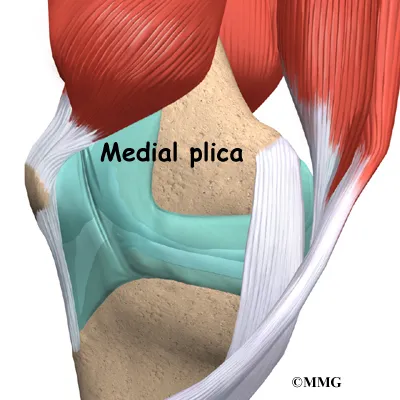
A plica is a fold in the synovial lining of the knee joint, similar to extra folds a tailor leaves in a shirt sleeve to allow arm movement. The synovial sleeve allows the knee bones to move smoothly without restriction.
The knee contains four plica folds, but only the medial plica commonly causes issues. This fold runs from the lower end of the kneecap to the side of the thighbone closest to the other knee. About 50–70% of people have a medial plica, and for most, it causes no problems.

Causes
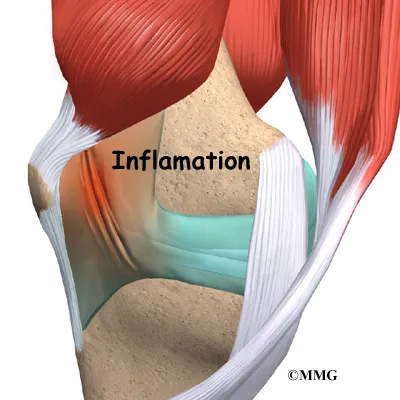
Plica becomes problematic when irritated over time or injured. Repetitive knee motions, such as running, biking, or using a stair-climbing machine, can inflame the medial plica. Sudden trauma, such as a fall or hitting the knee in a car accident, can also injure the plica. The initial injury may lead to scarring and thickening, making future irritation more likely.

Symptoms
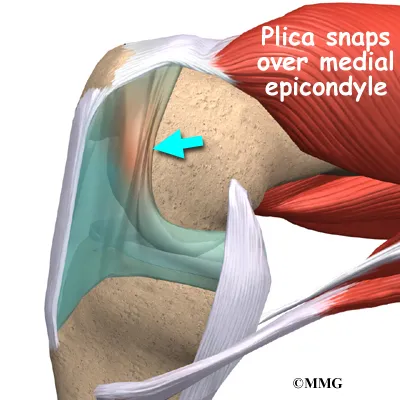
The main symptom is pain, usually along the inside of the knee. A snapping or clicking sensation may occur as the thickened plica rubs against the thighbone. The plica may also be tender to touch, and in some cases, swelling can develop.

Diagnosis
Diagnosis starts with a history and physical exam to locate pain and assess the plica tissue. X-rays cannot show the plica but help rule out other knee issues. If needed, MRI or CT scans may evaluate plica thickening.
When uncertainty remains, arthroscopy can confirm the diagnosis and allow treatment at the same time. A small fiber-optic camera inserted into the knee joint helps the surgeon view the medial plica and surrounding structures.
Treatment
Most cases improve without surgery. The main goal is to reduce inflammation and allow the knee to heal.
Nonsurgical Treatments:
Limiting activities that irritate the knee (running, biking, stair machines)
Anti-inflammatory medications such as ibuprofen or aspirin
Ice packs or ice massage to reduce swelling
Cortisone injections for more severe inflammation, used sparingly
Surgery:
If symptoms persist, arthroscopic surgery may remove the plica. Small incisions are used to insert a camera and surgical instruments to excise the thickened tissue. Recovery is typically smooth, as the plica is not an essential structure.
Rehabilitation
Nonsurgical Rehabilitation:
Return to normal activity in 4–6 weeks
Physical therapy to stretch and strengthen leg muscles
Ultrasound, friction massage, and ice to reduce inflammation
Electrical therapy (iontophoresis) for patients who cannot tolerate injections
Post-Surgery Rehabilitation:
Physical therapy begins soon after surgery to ease pain and swelling
Gentle knee motion and thigh exercises, progressing to more challenging activities
Closed-chain exercises, squats, lunges, and step-ups to rebuild strength
Focus on quadriceps strength, knee stability, and range of motion
Our goal is to help you manage pain, improve knee function, and regain full mobility. Once you progress, therapy sessions decrease, and you continue an ongoing home exercise program under our guidance.
Rehabilitation
Optimal management includes:
Aerobic exercise
Strengthening and range-of-motion exercises guided by a physical therapist
Weight management
Use of heat and cold therapy
Wedged insoles or supportive devices
Education programs or support groups
By integrating these strategies with glucosamine and chondroitin sulfate, patients may reduce pain, improve joint mobility, and maximize their ability to manage knee OA.
Our osteopathy services in Mississauga focuses on hands on care to restore movement, reduce pain, and improve physical function. Each session includes a full assessment of posture, mobility, and injury history to guide precise treatment. Care targets joint restriction, muscle tension, and circulation limits to support faster recovery and daily comfort. Services support injury recovery, chronic pain relief, postural correction, and long term physical balance.

Infants/Children and Youth Injuries
Infants, children, and youth injuries affect movement, posture, and development. Osteopathy focuses on gentle hands on care to address tissue tension, joint restriction, and movement imbalance for healthy growth and function.

Upper and Lower Back Pain Injury
Upper and lower back pain injury affects movement, posture, and daily activity. Osteopathy focuses on joint mobility, tissue tension, and movement balance to reduce strain and restore functional comfort.
Mississauga, Ontario, is a thriving city located along the shores of Lake Ontario, just west of Toronto. As one of Canada’s largest and fastest-growing cities, it is home to a diverse and multicultural population. With Pearson International Airport, the country’s busiest airport, and major corporate headquarters, Mississauga has established itself as a key business and economic hub in Canada. The city’s modern skyline, featuring high-rise condominiums and commercial developments, is complemented by green spaces, waterfront parks, and vibrant cultural attractions.
One of Mississauga’s most notable landmarks is Square One Shopping Centre, one of the largest malls in Canada, attracting millions of visitors each year. The downtown core is rapidly evolving, with new residential and commercial projects reshaping the city’s landscape. Meanwhile, neighborhoods like Port Credit offer a charming, lakefront lifestyle with boutique shops, cafes, and marinas, making it a popular destination for both residents and tourists. Historic Streetsville, with its small-town charm, provides a glimpse into Mississauga’s past while offering modern amenities.


Mississauga is also a city committed to education and innovation, with top-rated schools, colleges, and easy access to leading universities in the Greater Toronto Area. The city’s public transit system is expanding, with new LRT and GO Transit projects aiming to enhance connectivity and reduce congestion. With a strong focus on community development and sustainability, Mississauga continues to improve its infrastructure, recreational spaces, and public services to meet the needs of its growing population.
Beyond its economic success, Mississauga is a welcoming and family-friendly city with a strong sense of community. The city hosts numerous cultural festivals, outdoor events, and recreational activities, celebrating its diverse population. Whether enjoying waterfront trails in Lakeview, exploring Erin Mills and Meadowvale’s parks, or experiencing arts and performances at the Living Arts Centre, Mississauga offers something for everyone. With its blend of urban convenience and suburban comfort, it remains a top choice for those looking to live, work, and thrive in a dynamic and inclusive environment.
Central Mississauga
North Mississauga
West Mississauga
East Mississauga
South Mississauga
References
Cleveland Clinic. (2025, January 23). Plica syndrome. Cleveland Clinic. https://my.clevelandclinic.org/health/diseases/21750-plica-syndrome
Physiopedia contributors. (n.d.). Plica syndrome. Physiopedia. https://www.physio-pedia.com/Plica_Syndrome
Casadei, K., & Hermena, S. (2023, April 10). Plica syndrome. In StatPearls. StatPearls Publishing. https://www.ncbi.nlm.nih.gov/books/NBK535362/
American Association of Colleges of Osteopathic Medicine. (n.d.). What is osteopathic medicine? https://www.aacom.org/become-a-doctor/about-osteopathic-medicine
BOOK AN APPOINTMENT WITH US