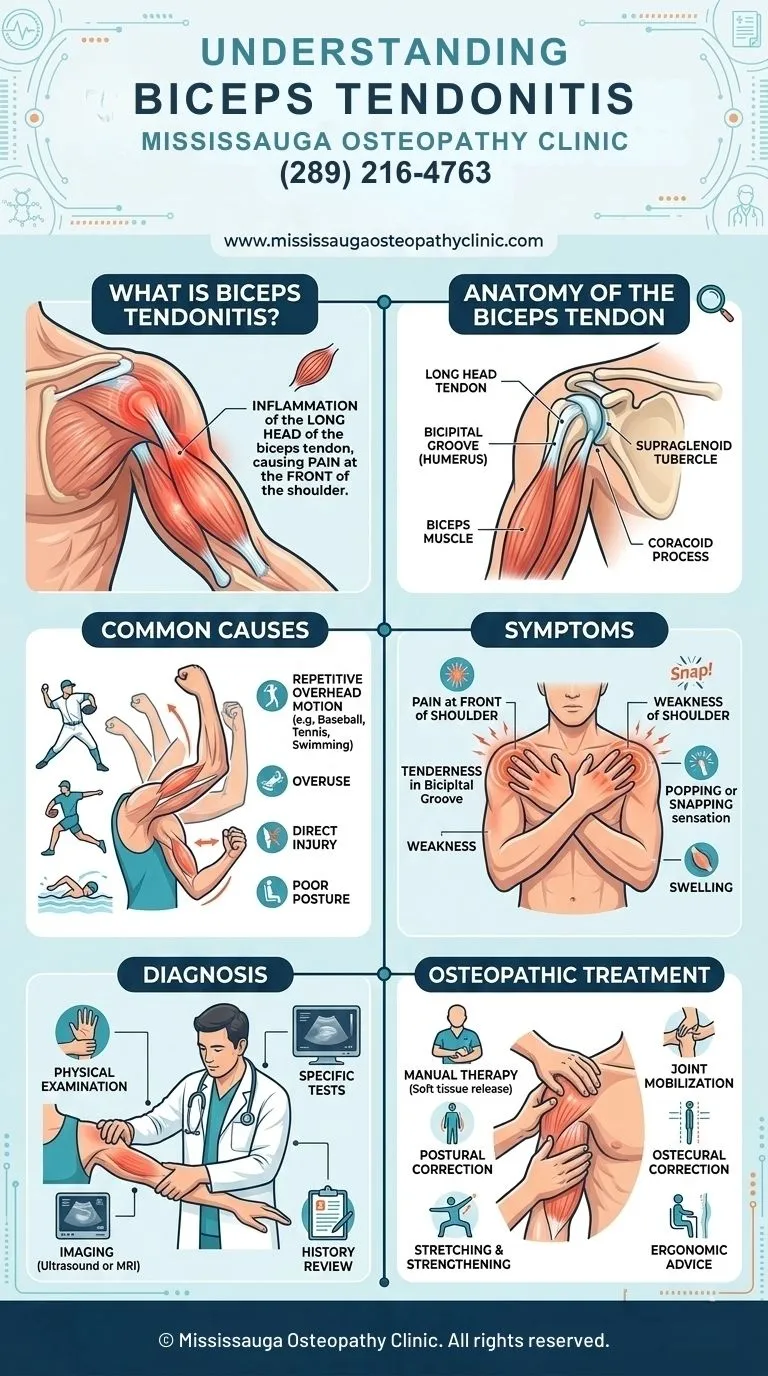
Biceps tendonitis commonly develops due to repetitive shoulder movements that place continuous stress on the tendon. When the tendon is repeatedly strained, microscopic damage can occur. If the tissue does not have enough time to heal between activities, inflammation may develop.
Athletes who frequently perform overhead arm motions—such as swimmers, tennis players, baseball pitchers, or golfers—may be at greater risk. Certain occupations that require repeated lifting or reaching can also contribute to overuse of the tendon.
Over time, degenerative changes may occur within the tendon. With aging and repeated stress, the normal alignment of collagen fibers can break down. Some fibers may weaken or fray, which reduces the tendon’s strength and increases the likelihood of inflammation or even tendon rupture.
Direct trauma can also trigger biceps tendonitis. For example, falling onto the shoulder may damage surrounding tissues and irritate the tendon.
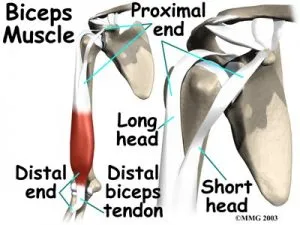
Another possible cause is injury to the transverse humeral ligament, which normally holds the tendon securely within the bicipital groove. If this ligament becomes torn, the tendon may slip out of position. This movement can create irritation and eventually lead to inflammation.
Biceps tendonitis may also occur as a result of other shoulder problems, including:
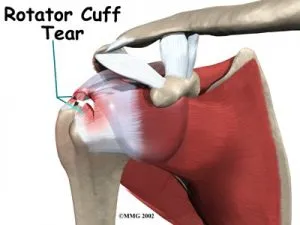
Rotator cuff tears
Shoulder impingement
Shoulder instability
When the rotator cuff is damaged, the upper arm bone may shift slightly upward within the socket. This altered movement pattern can place additional pressure on the biceps tendon, increasing irritation.
In shoulder impingement, tissues within the shoulder become compressed between the humeral head and the acromion, which can contribute to tendon irritation.
Similarly, shoulder instability allows excessive movement within the joint. When the stabilizing structures of the shoulder become stretched or weakened, the humeral head may move excessively within the socket. This additional motion can place stress on the nearby biceps tendon and lead to inflammation.