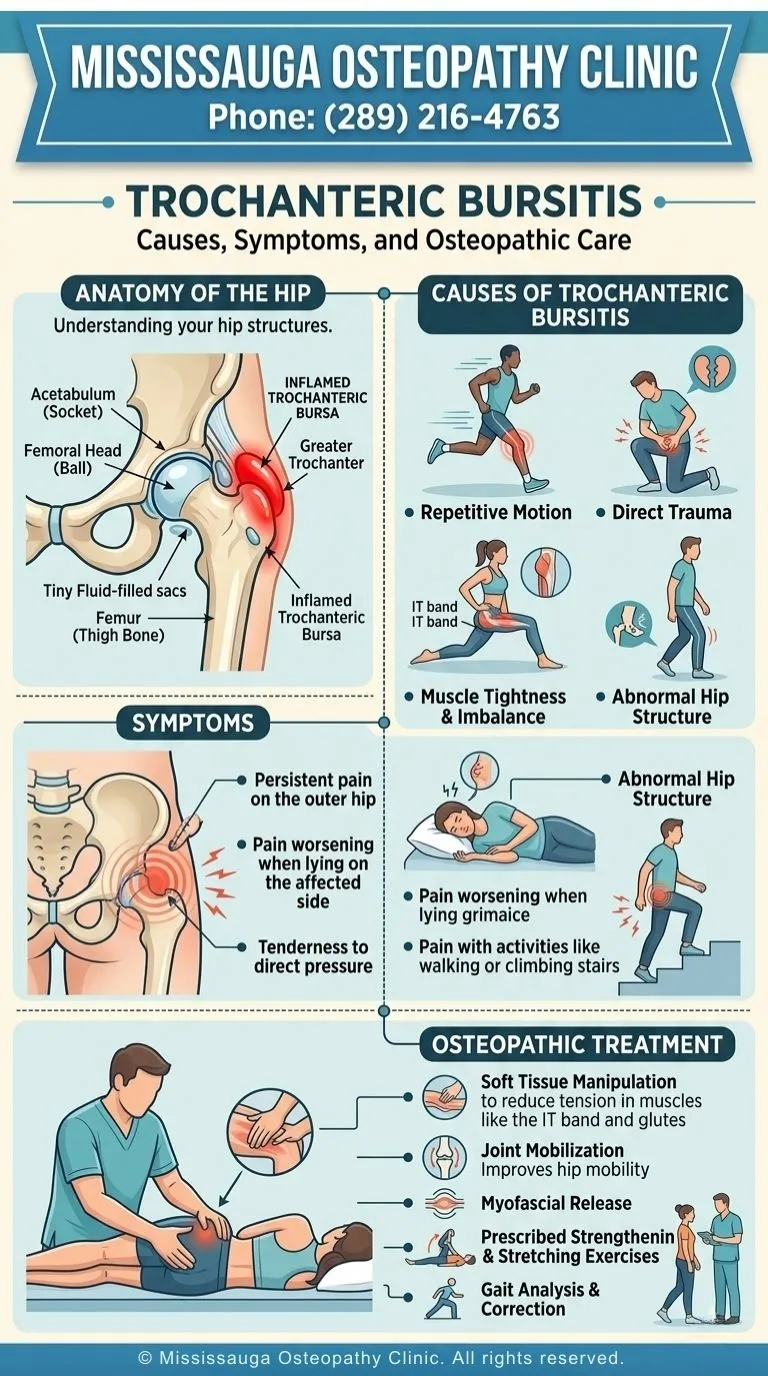
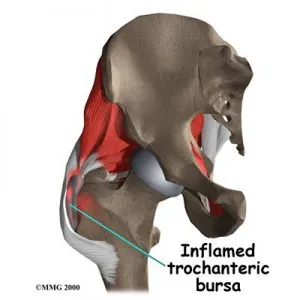
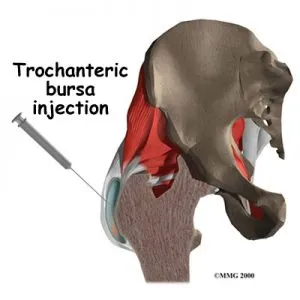
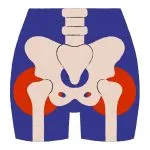
Trochanteric bursitis develops when the bursa becomes irritated or inflamed. This irritation usually occurs because of excessive friction between the tendon and the greater trochanter or as a result of trauma to the area.
One common contributing factor is tightness in the long tendon running along the outer thigh. This tendon connects with the gluteus maximus, a large muscle responsible for hip extension and stability. During walking, this tendon moves repeatedly over the greater trochanter. If it becomes tight, it can rub against the bursa with each step, creating friction and irritation.
Other contributing factors may include weakness in the gluteus medius, differences in leg length, or running on sloped or uneven surfaces. These factors can alter the mechanics of the hip joint and increase stress on the bursa.
In many individuals, trochanteric bursitis develops gradually without a clear injury. However, it may also occur after hip replacement surgery or other procedures involving the hip joint. Changes in alignment, joint mechanics, or scar tissue formation after surgery may contribute to irritation in the area.
Direct trauma can also cause this condition. A fall onto the side of the hip may lead to bleeding into the bursa, creating a hematoma. Although the bleeding itself is typically not dangerous, it can irritate the bursa and trigger inflammation. Over time, repeated irritation can cause the bursa to thicken and become chronically inflamed.