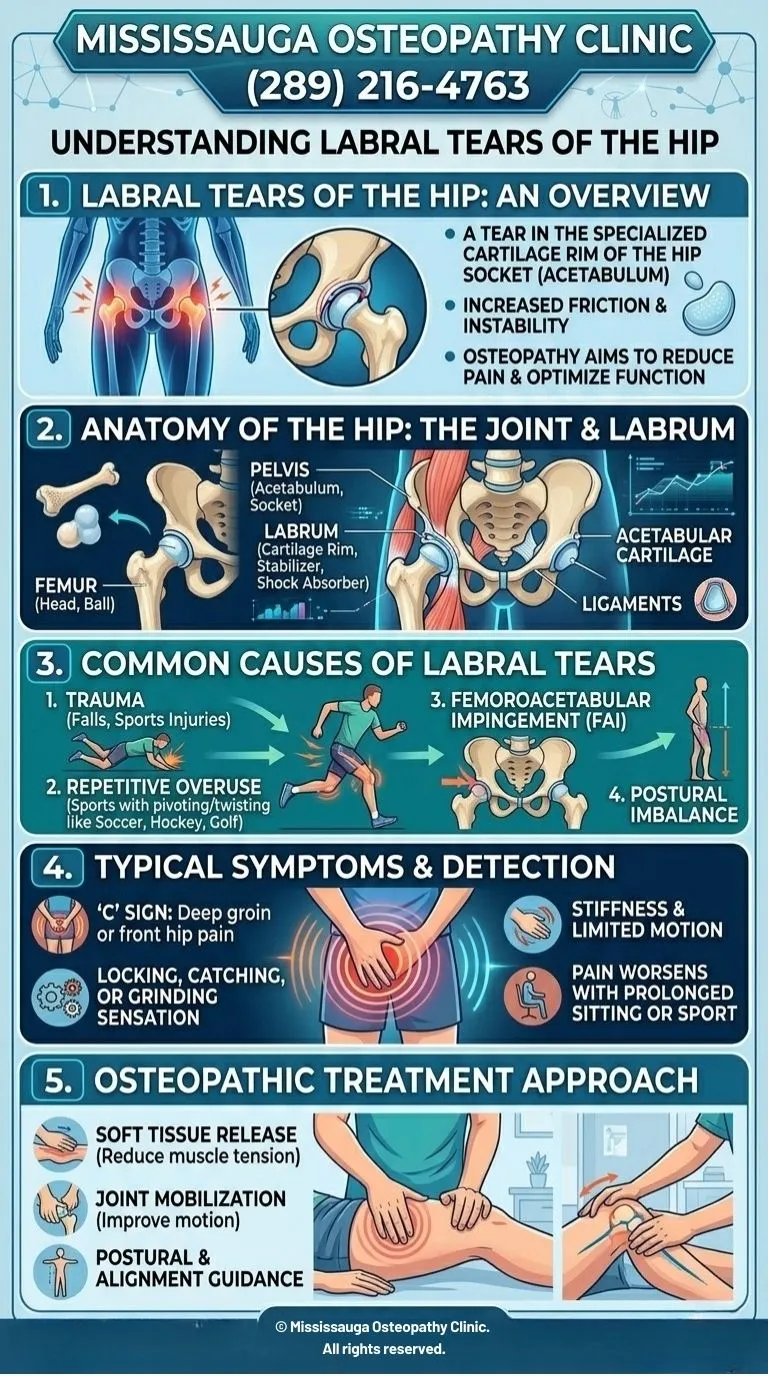
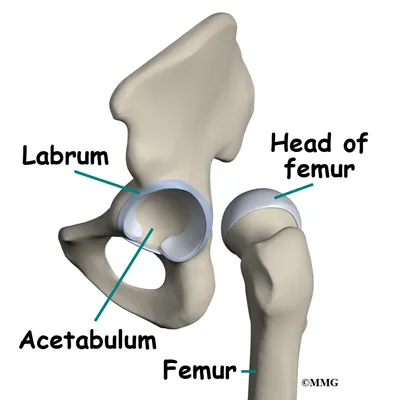
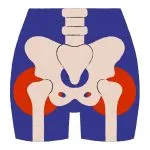
The acetabular labrum is a ring of strong connective tissue that surrounds the rim of the acetabulum, the socket portion of the hip joint. Its primary role is to help stabilize the joint by holding the femoral head (the ball at the top of the thigh bone) securely within the socket.
The labrum also plays an important role in maintaining joint fluid pressure, which helps nourish the cartilage that lines the hip joint. By sealing the joint, it contributes to smooth movement and long-term joint health.
Recent advances in imaging and anatomical research have significantly improved the understanding of the labrum’s structure. The labrum has two distinct zones:
The extra-articular zone, which lies near the joint capsule and has a good blood supply
The intra-articular zone, which lies closer to the joint surface and has very limited blood supply
Because of this difference, injuries occurring on the outer side of the labrum may heal more easily than injuries occurring on the inner side, which receives little blood flow.
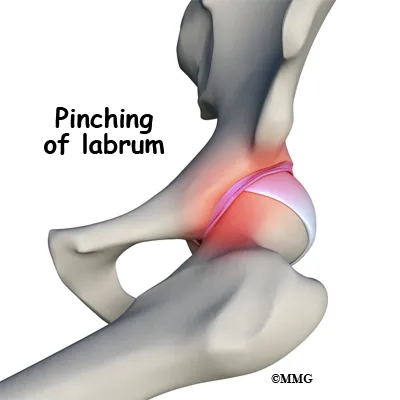
When the labrum is damaged, the protective seal of the hip joint may be compromised. Without this seal, the joint experiences increased stress and friction. Over time, this can contribute to joint instability, cartilage wear, and the development of early osteoarthritis.
A damaged labrum can also alter the center of rotation of the hip joint, increasing the load placed on surrounding structures during movement. Repetitive motion may then lead to further injury within the joint.