

Neck pain often shows up with headaches. Many people in Mississauga feel tightness at the base of the skull, stiffness through the upper back, and pressure behind the eyes. Workdays make symptoms worse. Driving makes symptoms worse. Sleep feels lighter. Then headaches start to repeat.
“Mississauga osteopath” focuses on movement, muscle tension, joint mechanics, and breathing patterns. Care often includes hands-on treatment plus a simple plan for work and home.
This guide explains how posture, desk work, and stress link to neck pain and headaches. This guide also explains when to book at Mississauga Osteopathy Clinic.
Why neck pain and headaches often show up together
Your neck supports your head all day. Your head weighs several kilograms. The neck works with the upper back, ribs, jaw, and shoulder blades to keep your gaze level and your breathing efficient.
When posture shifts forward, the load on the neck rises. Muscles at the base of the skull tighten. Upper traps and levator scapulae work harder. Joints in the upper neck get irritated. Headache patterns often follow.
Many headaches also link to:
- Sustained muscle tension
- Restricted upper back and rib movement
- Shallow breathing and rib cage stiffness
- Jaw clenching and teeth grinding
- Poor sleep and increased pain sensitivity
A Mississauga osteopath looks for the combination, not one symptom.

How posture drives neck pain
Posture is not a fixed “good” or “bad” position. Posture becomes a problem when you hold one position too long, especially with load.
Common posture patterns in desk work:
- Forward head position during screens
- Rounded shoulders with tight chest muscles
- Upper back stiffness with limited extension
- Shoulder blades that drift forward and lose control
- Chin poking forward while reading or typing
This pattern increases strain on the back of the neck. Small muscles at the base of the skull often get overworked. These muscles can refer pain toward the temples and behind the eyes.
A simple test
Stand with your back against a wall. Try to bring the back of your head to the wall without lifting your chin. If your chin lifts or your head struggles to reach the wall, forward head posture likely contributes to symptoms.
How desk work triggers headaches
Desk work triggers headaches through sustained load, limited movement, and breathing changes.
- Sustained muscle tension
Typing and mousing keep shoulders slightly elevated. Neck muscles stay active for hours. This raises tension and headache risk. - Poor screen setup
A low screen pulls your head down. A far screen pulls your head forward. Both increase neck load. - Reduced upper back motion
Many people lose thoracic extension during long sitting. The neck then compensates for looking forward. The upper neck gets compressed. - Shallow breathing
Stress and long sitting often lead to chest breathing. Neck muscles assist breathing. These muscles then fatigue and tighten faster. - Eye strain
A dry office, poor lighting, or strong screen glare increases squinting and forehead tension. Headaches often follow.
A Mississauga osteopath will often ask about your desk setup, commute posture, screen time, and break habits. These details matter.

How stress links to neck pain and headaches
Stress changes your nervous system state. Your body prepares for effort. Muscles tighten. Breathing gets shallow. Sleep quality drops.
Stress also increases jaw clenching. Clenching overloads jaw muscles and neck muscles. Many people wake with a tight jaw, stiff neck, and headache.
Stress patterns that often drive symptoms:
- High workload with few breaks
- Poor sleep or inconsistent sleep schedule
- Tight deadlines and constant notifications
- Anxiety with shallow breathing
- Long commutes with sustained gripping of the wheel
- Caffeine spikes with dehydration
A “Mississauga osteopath” does not treat stress as a mental issue only. A Mississauga osteopath treats the physical effects that stress creates.
Common headache types linked to neck and posture
- Tension-type headaches
People describe a tight band, pressure, or dull ache. Pain often starts in the neck and spreads to the temples or forehead. - Cervicogenic headaches
People describe pain starting at the base of the skull and moving to one side of the head. Neck movement often reproduces symptoms. - Headaches linked to jaw tension
People describe temple pain, facial tightness, and morning headaches. Teeth grinding often shows up.
Migraines can also link to neck tension, but migraines involve other features. These often include light sensitivity, nausea, or aura. Seek medical assessment for new migraine patterns or changes in migraine severity.
Warning signs to treat as urgent
Seek urgent medical assessment if you experience:
- Sudden severe headache unlike your normal pattern
- Headache with weakness, slurred speech, confusion, or fainting
- Headache with fever and neck stiffness
- Headache after a head injury with worsening symptoms
- New headache pattern after age 50
- Severe dizziness with neurological symptoms
- Vision loss or sudden visual changes
These signs require prompt medical care.

When to book a Mississauga osteopath for neck pain and headaches
Book with a Mississauga osteopath when:
- Headaches repeat weekly or more
- Neck pain lasts more than 7 to 14 days
- Pain worsens with desk work or driving
- You feel reduced neck rotation during lane changes
- You wake with stiffness, jaw tension, or morning headaches
- You feel headaches start from the base of the skull
- You feel tingling or numbness down the arm
- You feel headaches linked to stress load and poor sleep
Mississauga Osteopathy Clinic assesses movement, posture habits, breathing mechanics, and tissue sensitivity. This approach fits many desk-work patterns in Mississauga.
What a Mississauga osteopath checks during assessment
A Mississauga osteopath often checks:
- Upper neck joint mobility
- Base-of-skull muscle tension and trigger points
- Thoracic spine stiffness and rib mechanics
- Shoulder blade control and upper trap dominance
- Chest muscle tightness and shoulder rounding
- Jaw tension and clenching patterns
- Breathing pattern, including rib cage expansion
- Nerve mobility in the arms when symptoms suggest nerve irritation
This assessment clarifies why pain repeats and what changes matter most.
How osteopathic treatment helps neck pain and headaches
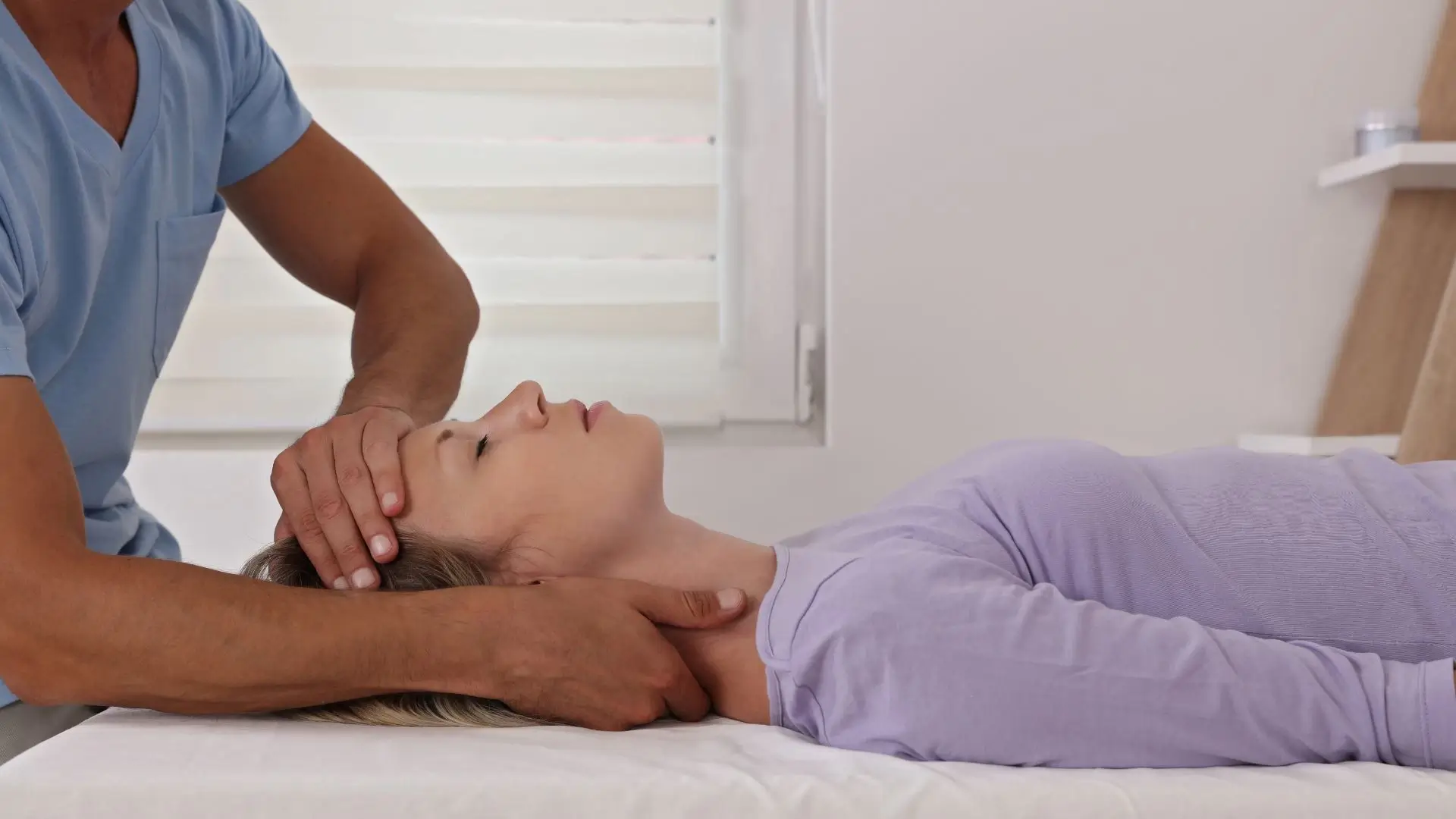
A “Mississauga osteopath” often combines hands-on care with a home plan that targets the drivers.
Hands-on treatment often aims to:
- Reduce muscle guarding in neck and upper back
- Improve upper back and rib mobility
- Improve upper neck joint motion
- Reduce jaw and facial tension when relevant
- Improve breathing mechanics through rib work
- Ease tissue sensitivity around the base of the skull
Home plan often targets:
- Upper back mobility to reduce neck compensation
- Deep neck flexor activation for better head support
- Scapular control to reduce shoulder elevation
- Breathing drills to reduce neck-driven breathing
- Microbreak habits to reduce sustained load
A good plan stays short and repeatable. A plan also fits workdays.
Desk setup changes that reduce neck strain
These changes often help within days.
- Screen height
Set the top third of your screen near eye level. - Screen distance
Place the screen about an arm’s length away. - Keyboard and mouse
Keep elbows near your sides. Keep shoulders relaxed. Avoid reaching. - Chair setup
Keep feet flat. Use a small lumbar support. Sit back in the chair. - Phone habits
Avoid cradling the phone between shoulder and ear. Use speaker or a headset. - Laptop work
Use a laptop stand and an external keyboard for longer sessions.
Many Mississauga osteopath clients improve quickly once setup supports posture.
Microbreak routine for desk workers
Use a simple routine every 30 to 45 minutes:
- Stand up
- Take 5 slow breaths into ribs
- Do 5 gentle chin tucks
- Do 10 shoulder blade squeezes
- Walk for 60 seconds
This routine reduces sustained load and resets breathing.
Stress and sleep steps that reduce headaches
You do not need a complex routine. Use two simple steps.
- Breathing reset
Use 4 seconds inhale through nose. Use 6 seconds exhale through nose. Repeat for 2 minutes. Do this twice daily. - Sleep anchor
Choose a fixed wake time. Keep this time consistent across weekdays and weekends.
Better sleep reduces pain sensitivity and muscle guarding.
At-home relief tips for flare-ups
Use these steps during flare-ups:
- Use heat on upper back and neck for 15 to 20 minutes
- Walk for 10 to 20 minutes to reduce stiffness
- Limit long static phone use
- Reduce heavy upper body training for 48 hours
- Hydrate and reduce late-day caffeine
- Use a supportive pillow height that keeps neck neutral
If symptoms include arm weakness, worsening numbness, or severe dizziness, seek medical assessment.
How long does recovery take
Many posture and desk-related cases improve when you combine:
- Hands-on care
- Daily mobility
- Strength and control work
- Desk setup changes
- Stress and sleep steps
Some people feel early relief within one or two visits. Longer-standing symptoms often take more time, especially when strength loss and poor sleep play a role. Progress should show in function first. Examples include longer comfortable sitting, easier driving, and fewer headaches.
When to book at Mississauga Osteopathy Clinic
If neck pain and headaches link to desk work, posture, and stress, book with Mississauga Osteopathy Clinic. An assessment clarifies what drives symptoms. You leave with a plan you can follow during workdays.
Mississauga Osteopathy Clinic
https://www.mississaugaosteopathyclinic.com/