

People search for a Mississauga osteopath for one reason. Pain or stiffness starts to block daily life. Work feels harder. Sleep feels lighter. Exercise feels risky. Driving, lifting, or sitting triggers symptoms.
A “Mississauga osteopath” focuses on how the body moves. A session targets joints, muscles, connective tissue, breathing mechanics, and posture habits. An osteopath uses hands-on assessment and manual techniques. The goal stays simple. Improve movement. Reduce strain. Support recovery.
This guide explains what an osteopath in Mississauga does. This guide also explains what to expect during a first visit at Mississauga Osteopathy Clinic.
What an osteopath in Mississauga does day to day
A Mississauga osteopath helps people with movement problems. Many clients describe pain, tightness, weakness, tingling, limited range, or recurring flare-ups. Many clients also describe stress and fatigue linked to long hours at a desk or long commutes.
An osteopath in Mississauga often works with concerns such as these:
- Back pain from lifting, sitting, or sudden strain
- Neck pain linked to screens, posture, or past injuries
- Headaches linked to neck and upper back tension
- Shoulder pain, rotator cuff irritation, and limited overhead motion
- Hip pain, groin tightness, and uneven walking patterns
- Knee pain linked to training load, alignment, or mobility limits
- Jaw tension and clenching habits that affect the neck
- Rib and upper back stiffness that changes breathing comfort
- Repetitive strain from keyboards, tools, or childcare
- Sports injuries and return-to-activity planning

An osteopath does three main jobs in each plan of care.
Find movement limits and overload patterns
Pain rarely comes from one spot alone. A stiff hip often drives low back strain. A tight chest often drives neck tension. An osteopath checks how key areas move together.
Reduce strain through manual treatment
Manual treatment often includes soft tissue work, joint mobilization, myofascial release, and gentle techniques aimed at improving motion. A session aims to calm protective muscle guarding and improve joint glide.
Give simple steps for home and work
Progress speeds up when daily habits support the plan. A Mississauga osteopath often gives short mobility drills, breathing work, and posture cues. A plan also covers sleep positions, lifting mechanics, and training changes.
What osteopathy looks like in real life
A simple example helps.
A client feels low back pain during sitting and bending. The painful spot sits in the lower spine. The osteopath checks hip rotation, hamstring length, core control, and rib cage motion. The assessment shows tight hip flexors and reduced hip rotation. The pelvis tips forward during sitting. The low back absorbs extra load.
Treatment targets hips, pelvis, and lower back tissues. The plan adds two short home drills. The client adjusts chair height and foot support. Symptoms often reduce because the body shares load across more joints.
A Mississauga osteopath follows the same logic across many cases. Improve load sharing. Improve movement options. Reduce the need for compensation.
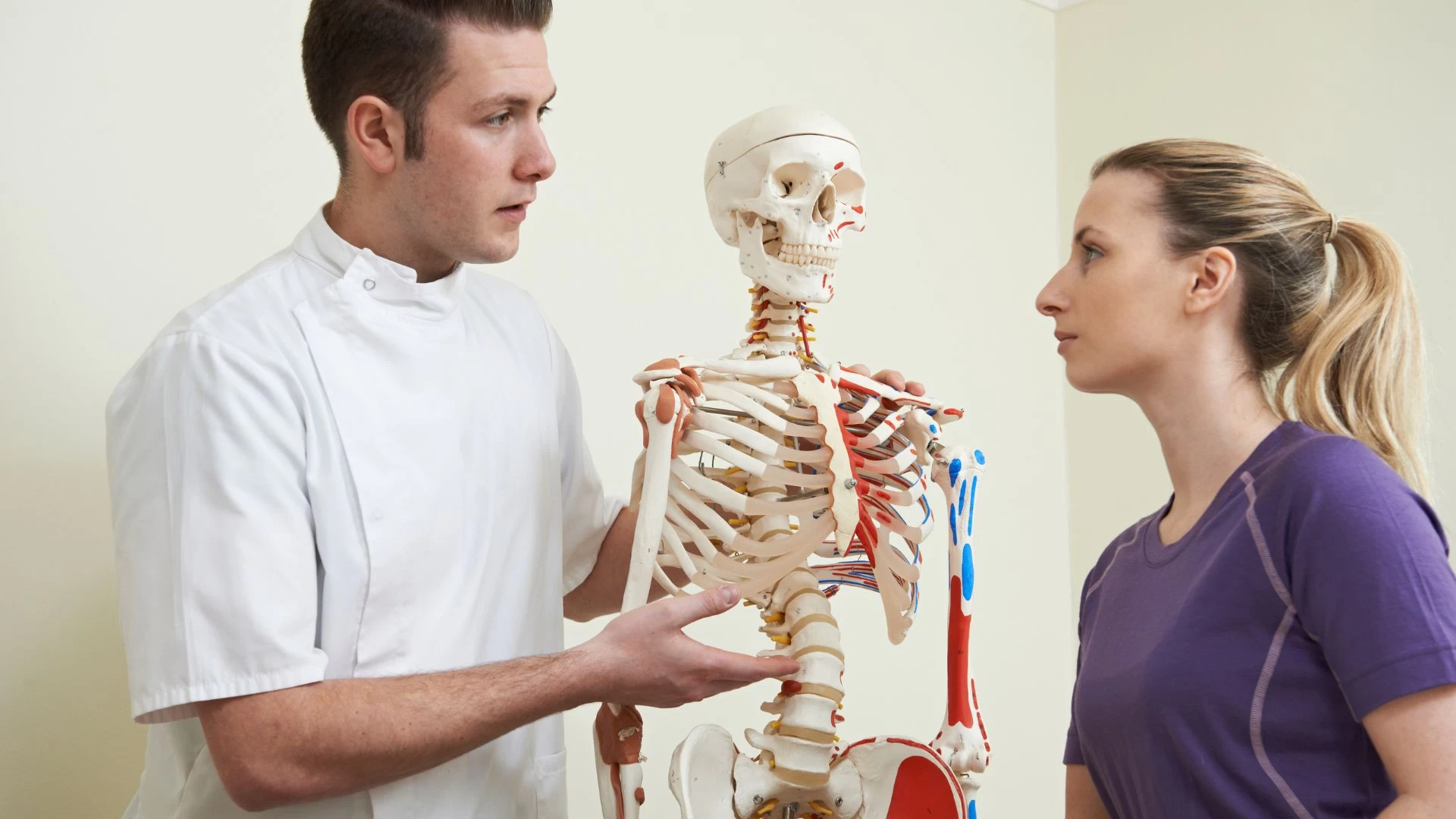
What happens in your first visit at Mississauga Osteopathy Clinic
A first appointment includes conversation, assessment, hands-on care, and a plan. The pace feels calm. Questions matter. Consent matters. You stay involved from start to finish.
Step 1. Intake and goals
A first visit starts with a focused intake. Expect questions like these:
- Where does pain or stiffness show up
- When did symptoms start
- What movements worsen symptoms
- What reduces symptoms
- What work demands and daily tasks matter most
- What exercise or sport feels important
- What past injuries shape movement now
- What medical history or current care matters
A good Mississauga osteopath also asks about sleep, stress, energy, and activity level. These factors change recovery speed.
Tip for stronger outcomes
Bring a short timeline. Write down three key dates. Symptom start date. Any major flare-up date. Any imaging or diagnosis date. A clear timeline saves time.
Step 2. Screening and safety checks
A first visit also includes screening questions. These questions help spot red flags and risk factors. A Mississauga osteopath aims to treat safely and refer when needed.
Seek urgent medical care when severe symptoms show up. Examples include loss of bowel or bladder control, sudden weakness, chest pain, severe shortness of breath, or sudden severe headache. A clinic visit does not replace urgent care for these issues.
Step 3. Physical assessment
The osteopath then checks movement and function. Assessment often includes:
- Posture and breathing pattern observation
- Range of motion for spine and key joints
- Strength and control tests for core and hips
- Balance and coordination checks when needed
- Palpation of muscles and connective tissue
- Joint motion testing
The osteopath explains findings in plain language. A first visit should answer these questions:
- What drives symptoms
- What keeps symptoms going
- What changes help fastest
Tip for the visit
Wear clothes that allow movement. Athletic wear works well. A t-shirt and shorts or leggings help. A clinic also provides draping and privacy.

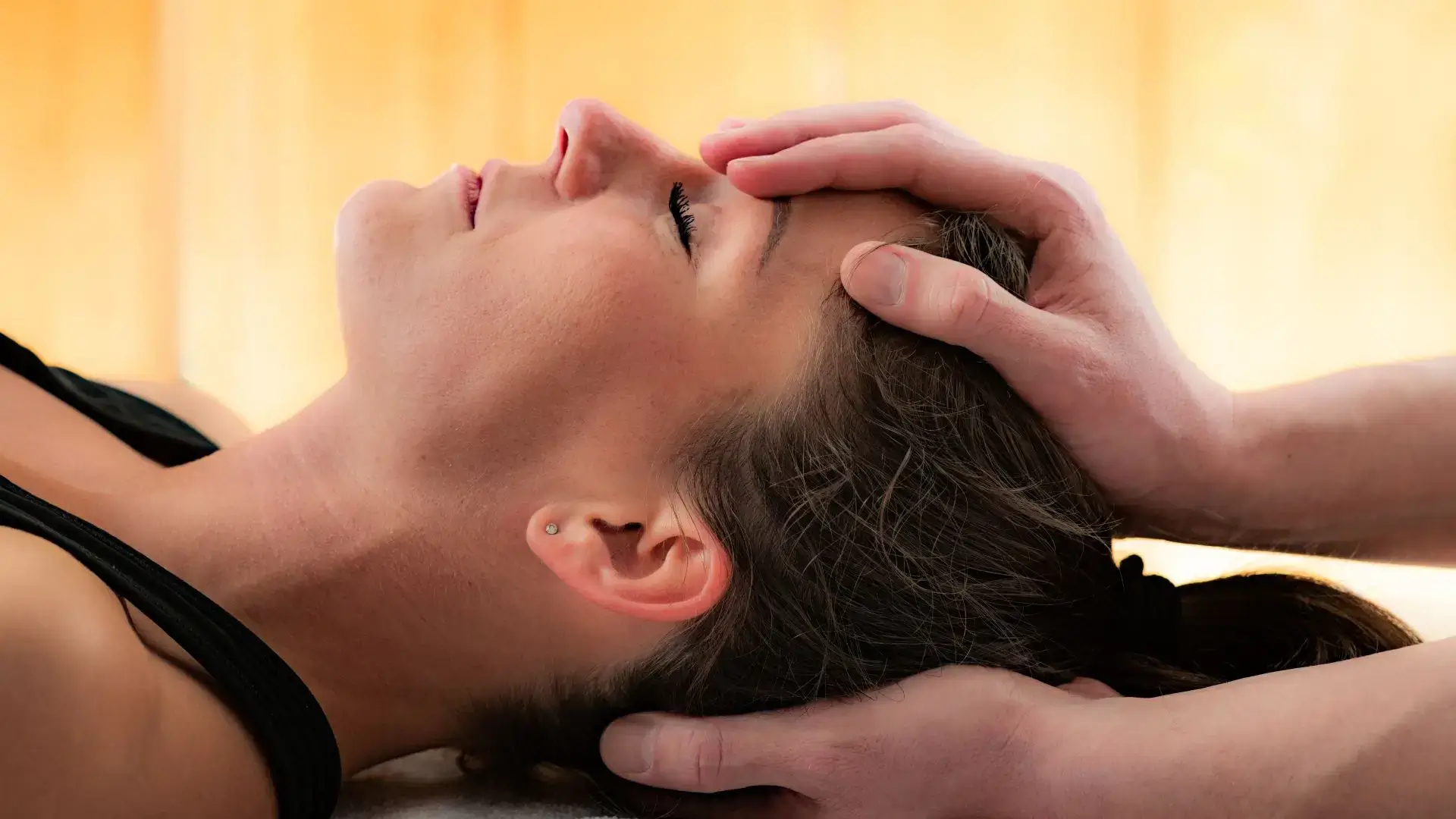
Step 4. Hands-on treatment
After assessment, hands-on work often starts in the first visit. The approach depends on findings and comfort level. Treatment often aims to:
- Reduce muscle guarding
- Improve joint mobility
- Ease tissue sensitivity
- Improve rib cage motion and breathing comfort
- Reduce compression in overloaded areas
A “Mississauga osteopath” adapts pressure and technique. Some clients prefer gentle work. Some clients prefer deeper soft tissue work. Communication stays important.
What treatment feels like
Many clients describe mild pressure, stretching sensations, and temporary soreness similar to a workout. Many clients feel lighter movement or easier turning right after the session. Response varies across people and across visits.
Step 5. Home plan and next steps
A first visit ends with a simple plan. Expect two to five action steps, not a long list. A solid plan includes:
- One or two mobility drills
- One strength or control drill when needed
- One daily habit change, such as desk setup or sleep position
- A suggested follow-up schedule based on goals
A Mississauga osteopath also sets clear markers for progress. Examples include:
- Less pain during sitting for 45 minutes
- Easier neck rotation during driving
- Improved squat depth with less pinch
- Return to walking or training without flare-ups
Tip for faster progress
Do the home plan on the same schedule as brushing teeth. Short sessions work. Five minutes daily often beats one long session once per week.
Questions to ask a Mississauga osteopath during the first visit
Strong questions improve the plan and reduce uncertainty. Use questions like these:
- What movement limits link most to symptoms
- What change should show up first
- What activity should pause for now
- What activity should continue
- What home steps matter most
- What signs signal overdoing exercise
- How many visits fit this stage of care
A good osteopath answers in clear terms and connects each step to a goal.
How many visits do most people need
No single number fits all cases. The plan depends on duration, intensity, activity demands, and recovery habits. Still, common patterns show up.
Acute strain after a recent incident often responds faster. A plan often starts with closer visits, then spreads out.
Long-term pain often takes longer. Long-term pain often involves strength loss, fear of movement, and layered compensation. A plan often combines manual care with exercise progressions.
A Mississauga osteopath should give a range after the first assessment and adjust based on response.
How to prepare for your first osteopathy appointment
Use this checklist:
- Bring a list of current medications and supplements
- Bring relevant imaging reports when available
- Bring orthotics or braces used often
- Arrive a few minutes early for forms
- Eat a light meal before the session
- Drink water after the session
- Plan an easy evening after the first visit when possible
Avoid heavy training right before the first appointment. The assessment works better when muscles feel closer to baseline.
What to do after the first visit
A first session often changes tissue sensitivity and movement patterns. Follow these steps:
- Walk for 10 to 20 minutes later the same day
- Follow the home plan exactly as written
- Track one key metric, such as sitting time or step count
- Use heat or a warm shower for general soreness
- Avoid testing limits with heavy lifting for 24 to 48 hours
Call the clinic when symptoms spike sharply or when new symptoms show up. Clear communication keeps care safe and targeted.
Why local experience matters when you look for a Mississauga osteopath
A local Mississauga osteopath understands common local demands. Many residents commute. Many residents work long hours at screens. Many residents balance childcare with work. Many residents train at gyms near Square One, Port Credit, Clarkson, Erin Mills, and Streetsville. These patterns shape strain and recovery.
Mississauga Osteopathy Clinic focuses on practical care plans. A plan should fit real schedules. A plan should fit real bodies with real work demands.
When to combine osteopathy with other care
Some cases improve faster with team care. An osteopath often works alongside family doctors, physiotherapists, massage therapists, chiropractors, and mental health providers. Shared care helps when:
- Pain links to work stress and poor sleep
- Strength loss needs a structured gym program
- A sports goal needs performance coaching
- Nerve symptoms need further medical review
- Inflammatory or systemic symptoms need medical assessment
A clear referral plan protects health and speeds up answers.
Key takeaways for anyone searching Mississauga osteopath
A “Mississauga osteopath” assesses movement and load patterns. Treatment uses hands-on techniques and a focused home plan. A first visit includes intake, assessment, treatment, and next steps. You leave with a plan you can follow the same day.
If you want care focused on movement, posture, and recovery habits, book with Mississauga Osteopathy Clinic. A first visit sets a clear baseline and a clear direction.