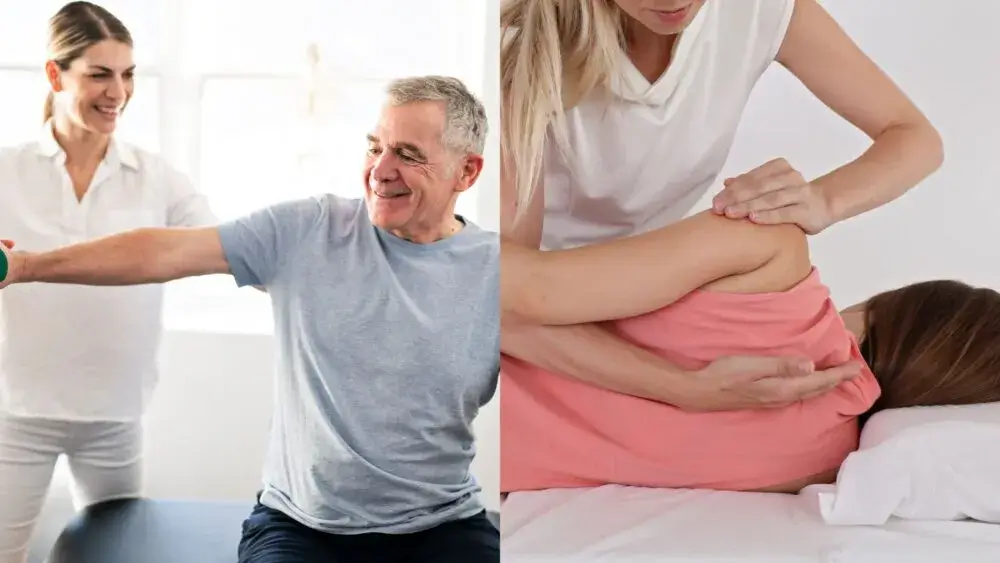
When patients contact Mississauga Osteopathy Clinic – Lakeshore, they often ask about the difference between osteopathy and physiotherapy. Both professions support recovery from injury and pain. The approach, assessment style, and treatment focus differ in important ways.
Understanding these differences helps you choose the right care for acute pain and long term recovery.
What Is Osteopathy Therapy?
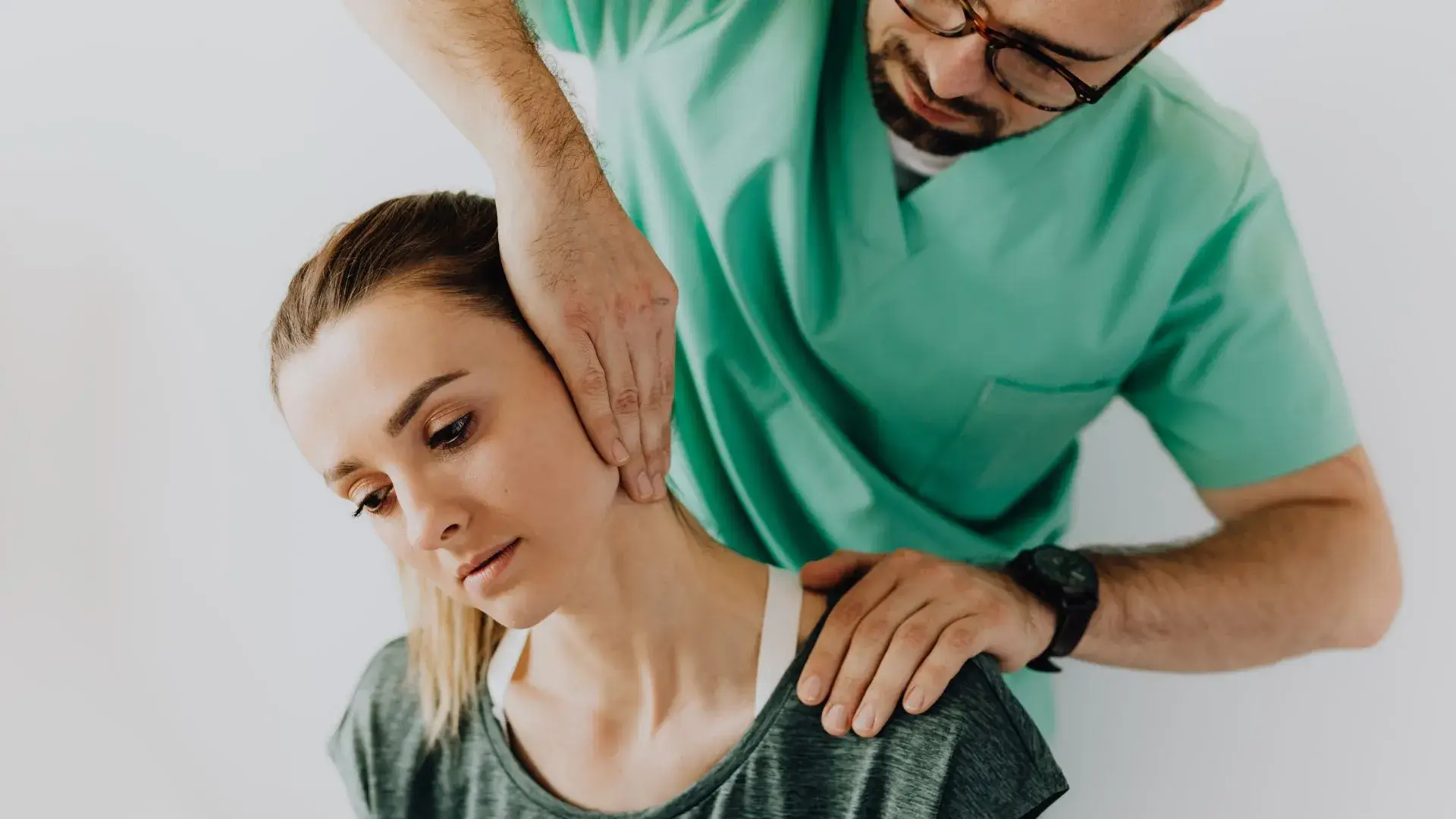
Osteopathy is a hands-on manual therapy that focuses on restoring motion in joints, muscles, fascia, and connective tissues. As osteopathic practitioners, we assess how your entire body moves and functions as one system.
Pain rarely exists in isolation. Lower back pain often links to hip restriction. Neck pain often connects to upper back stiffness or rib dysfunction. We examine these relationships during every session.
Our treatment includes:
• Manual osteopathic therapy
• Joint mobilization
• Soft tissue release
• Myofascial techniques
• Gentle craniosacral techniques when indicated
The goal is simple. Restore motion. Reduce strain. Support the body’s natural healing process.

What Is Physiotherapy?
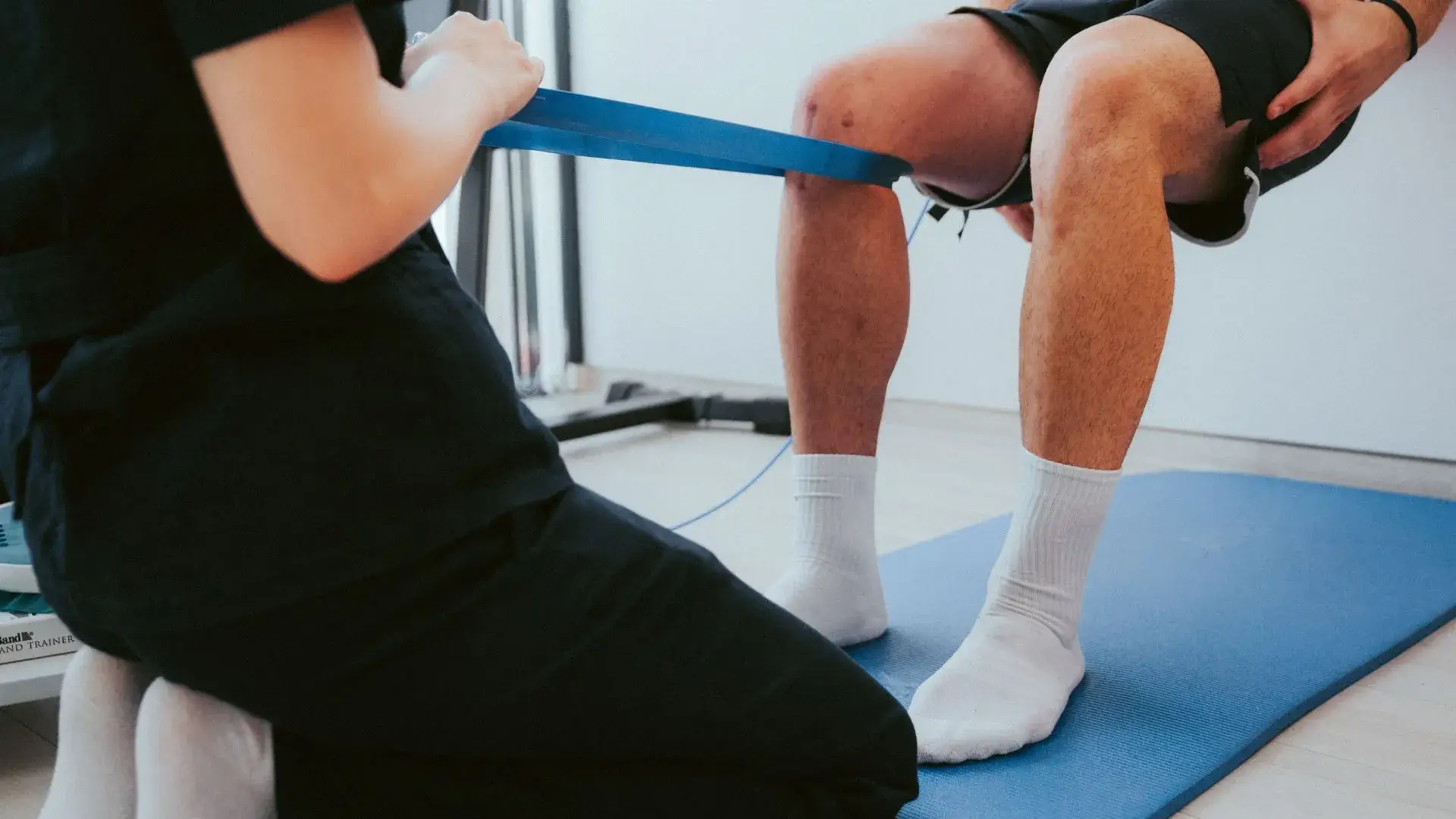
Physiotherapy focuses on rehabilitation and functional improvement. Treatment often includes structured exercise programs, strength training, taping, ultrasound, and electrotherapy.
Physiotherapists play an important role in post operative recovery, sports rehabilitation, and rebuilding strength after injury. Exercise progression forms the core of most physiotherapy programs.
Patients often attend physiotherapy after surgery, fractures, ligament tears, or major joint injuries. The emphasis remains on restoring strength, endurance, and stability over time.
Differences in Assessment and Clinical Approach
One of the largest differences lies in how we assess the body.
At Mississauga Osteopathy Clinic, we perform a full body assessment at every visit. We evaluate posture, spinal alignment, pelvic balance, rib movement, and joint mobility. We assess how you walk, sit, bend, and rotate.
We look for mechanical restrictions that increase tension on surrounding tissues and nerves. Acute pain often results from joint compression, muscle guarding, or fascial restriction. When we restore movement in these structures, pain often decreases quickly.
Physiotherapy assessments often concentrate on the injured area. If you present with shoulder pain, the focus remains primarily on the shoulder complex. Treatment then centers on strengthening and stabilizing that region.
Both approaches have value. The difference lies in scope and technique emphasis.
Why Osteopathy Often Provides Faster Pain Relief
Many patients choose osteopathy because they want direct hands on pain relief.
Acute pain creates muscle guarding and joint stiffness. When a joint loses normal motion, surrounding muscles tighten to protect the area. This protective tension increases pressure and inflammation. Pain signals rise.
Manual osteopathic techniques directly address joint restriction and soft tissue tension. When we gently mobilize restricted joints and release tight fascia, pressure reduces. Circulation improves. The nervous system shifts from a guarded state to a calmer state.
Studies on manual therapy for acute low back pain show short term pain reduction and improved mobility compared to minimal intervention. Patients often report noticeable relief within the first few sessions.
While exercise remains important for long term stability, many acute pain patients need immediate reduction in discomfort before they tolerate strengthening programs.
Osteopathy for Acute Neck and Back Pain
Acute neck and back pain remain among the most common reasons patients visit our clinic.
Prolonged desk work, poor posture, sudden lifting, or stress related muscle tension contribute to flare ups. These episodes often involve joint fixation in the spine, rib restriction, and deep muscle spasm.
During treatment, we:
• Assess spinal segments for mobility restriction
• Release tight paraspinal muscles
• Improve rib cage movement
• Address pelvic imbalance when present
Patients often experience improved range of motion and reduced stiffness after the session. Early intervention reduces the risk of chronic compensation patterns.
Osteopathy for Sciatica and Nerve Irritation
Sciatic pain often results from lumbar joint restriction, pelvic imbalance, or tight hip musculature compressing nerve pathways.
Osteopathic treatment focuses on relieving mechanical pressure on the nerve. We mobilize lumbar segments, address sacroiliac joint dysfunction, and release deep hip muscles.
As tension reduces, nerve irritation often decreases. Patients report reduced radiating pain and improved walking tolerance. Early manual intervention helps prevent prolonged nerve sensitivity.
Acute Shoulder, Rib, and Joint Pain
Sudden shoulder pain after lifting or sports activity often links to joint restriction in the shoulder blade or upper back.
Rib dysfunction can cause sharp pain during breathing or rotation. Many patients mistake this for muscle strain alone.
Osteopathy evaluates how the shoulder, ribs, spine, and neck function together. We restore coordinated motion across these structures. This integrated approach often reduces pain faster than isolated strengthening during the acute stage.
Whole Body Integration Matters
The body functions as a connected unit. Restriction in one region changes movement patterns elsewhere.
For example, limited ankle mobility alters walking mechanics. Over time, stress transfers to the knee, hip, and lower back. Treating only the painful area leaves the underlying restriction unresolved.
At Mississauga Osteopathy Clinic, we identify these compensation patterns early. Addressing root mechanical dysfunction reduces recurrence.
When Physiotherapy Plays a Strong Role
Physiotherapy remains valuable for long term rehabilitation. After acute pain settles, structured exercise supports strength, endurance, and stability.
Post surgical cases often require progressive loading protocols. Ligament reconstruction and fracture recovery demand staged strengthening. Physiotherapy excels in these scenarios.
Many patients benefit from a combined approach. Osteopathy reduces acute pain and restores mobility. Physiotherapy builds strength to maintain results.
Choosing the Right Care for You
If you are dealing with acute pain, stiffness, or sudden mobility loss, osteopathy offers direct manual intervention aimed at rapid relief. Hands on treatment addresses joint mechanics and soft tissue tension immediately.
If you are recovering from surgery or rebuilding strength after major injury, physiotherapy provides structured rehabilitation programs.
At Mississauga Osteopathy Clinic, we focus on pain relief, mobility restoration, and functional recovery. Our full body assessment and manual approach support patients who want fast, targeted relief from acute pain.
Early treatment reduces compensation patterns and lowers the risk of chronic pain. If neck pain, back pain, sciatica, or joint stiffness limit your daily life, osteopathic care offers a focused path toward recovery and improved movement.
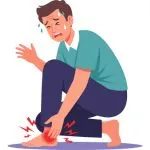
Ankle pain and foot injury disrupt walking, balance, and daily movement. Osteopathy addresses joint restriction, tissue tension, and movement imbalance to restore mobility and support stable, pain free function.
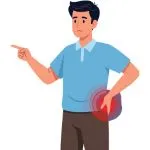
Hip pain and knee injury affect walking, sitting, and daily movement. Osteopathy focuses on joint mobility, muscle balance, and movement control to reduce strain and support long term function.
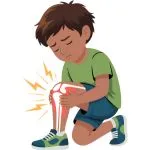
Infants/Children and Youth Injuries
Infants, children, and youth injuries affect movement, posture, and development. Osteopathy focuses on gentle hands on care to address tissue tension, joint restriction, and movement imbalance for healthy growth and function.
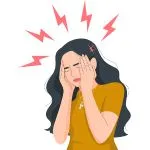
Migraines and headaches disrupt focus, sleep, and daily function. Osteopathy focuses on reducing tension, improving circulation, and restoring movement balance to support consistent relief and long term comfort.
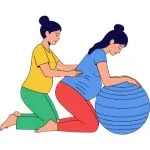
Pregnancy places increased demand on the body, affecting posture, joints, and movement. Osteopathy offers gentle hands on care to support comfort, mobility, and physical balance throughout maternity.
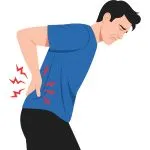
Upper and Lower Back Pain Injury
Upper and lower back pain injury affects movement, posture, and daily activity. Osteopathy focuses on joint mobility, tissue tension, and movement balance to reduce strain and restore functional comfort.
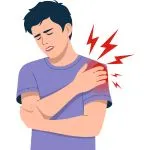
Shoulder pain injury limits arm movement and daily tasks. Osteopathy addresses joint restriction, tissue tension, and movement imbalance to restore mobility and support stable shoulder function.
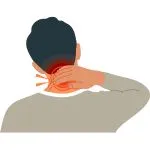
Neck pain injuries restrict movement and strain daily activity. Osteopathy focuses on joint mobility, muscle tension, and movement balance to support comfort and functional stability.
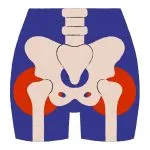
Women pelvic health wellness requires clear guidance and focused care. At Mississauga Osteopathy Clinic, you receive structured osteopathic support designed to improve pelvic function, movement, and daily comfort.
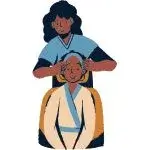
Our Mississauga osteopathy clinic offers Craniosacral Therapy, a gentle hands-on approach that supports natural movement of the skull and sacrum. Using light touch, your osteopath helps release restrictions, improve nervous system balance, and enhance overall body function.