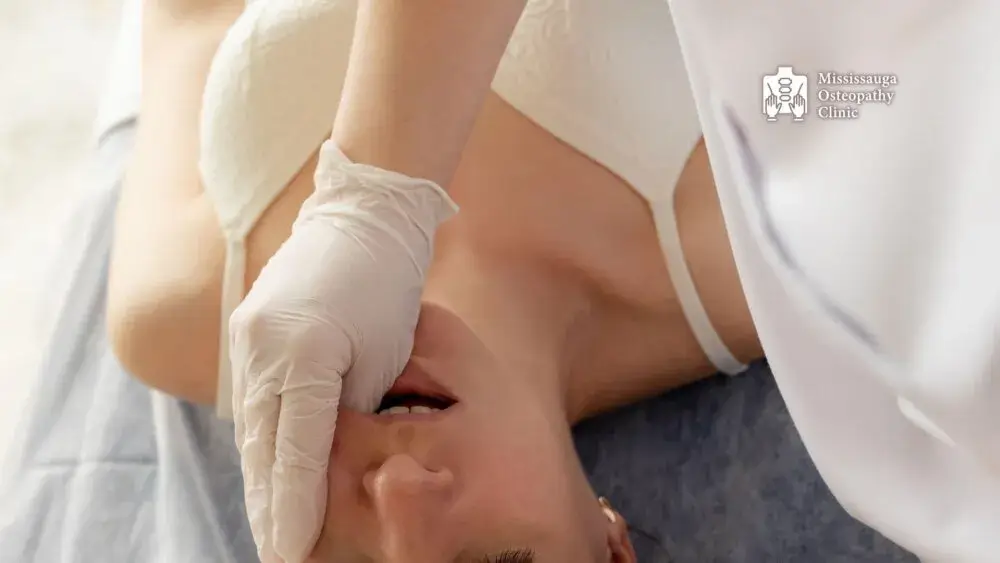
Jaw pain and facial tension affect more than your jaw. You may feel headaches, ear pressure, neck tightness, and tooth sensitivity. Chewing can hurt. Yawning can hurt. Morning stiffness can set the tone for the whole day. Many people in Mississauga search for a “Mississauga Osteopath” when jaw tension starts to link with neck pain and headaches.
TMJ refers to the temporomandibular joint. This joint connects your jaw to your skull. The joint works with the muscles of your face, neck, and upper back. When the system becomes overloaded or sensitive, pain and tension build.
This guide explains common triggers, practical home tips, warning signs to take seriously, and when to seek care. This guide also explains how a Mississauga osteopath at Mississauga Osteopathy Clinic approaches TMJ jaw pain patterns.
What TMJ jaw pain and facial tension feel like
People describe TMJ and facial tension in many ways:
- Jaw ache near the ear or cheek
- Tightness in the temples
- Headaches that start near the jaw or base of the skull
- Clicking, popping, or grinding sounds with opening
- Limited mouth opening or a “stuck” feeling
- Pain during chewing, especially tougher foods
- Tooth sensitivity from clenching
- Ear fullness or pressure without infection
- Neck and shoulder tightness that rises with stress
Symptoms often change across the day. Many people feel worse in the morning from overnight clenching. Many people feel worse by late afternoon due to work stress and screen posture.
Common triggers for TMJ pain in Mississauga
TMJ pain often comes from repeated load and sustained tension. Many triggers overlap.
- Clenching and teeth grinding
This is the most common driver. People clench during stress, focus, driving, workouts, and sleep. Clenching overloads jaw muscles and irritates the TMJ. - Stress and nervous system tension
Stress increases muscle tone. Breathing becomes shallow. Jaw muscles tighten. Neck muscles tighten. Headaches become more frequent. - Desk work posture and forward head position
Forward head posture changes jaw mechanics. Neck and jaw muscles work harder to stabilize the head. Facial tension rises, especially during long computer sessions. - Poor sleep and sleep disruption
Poor sleep increases pain sensitivity. Poor sleep also increases clenching risk. Many people wake with jaw tightness and headache. - Chewing overload
Gum chewing, tough foods, and long chewing sessions during flare-ups irritate jaw tissues. - Dental work and prolonged mouth opening
A long dental appointment can trigger a flare-up. Holding the mouth open for a long time overloads joint and muscles. - Trauma and jaw impacts
A fall, sports contact, or whiplash can change jaw and neck mechanics. - Sinus congestion and mouth breathing
Mouth breathing changes tongue and jaw position and can increase tension over time.
A Mississauga osteopath assesses these drivers, then targets the biggest ones first.
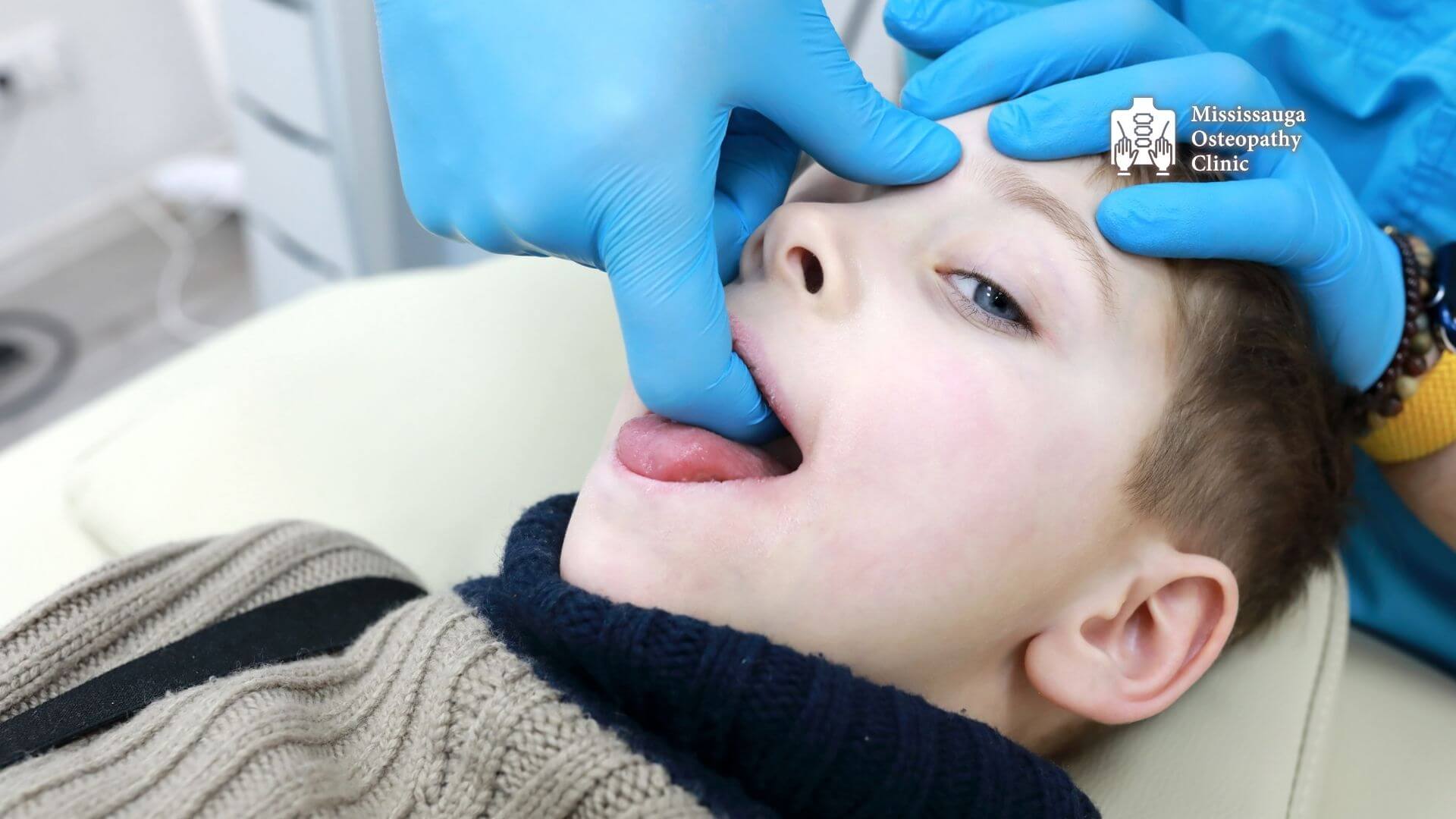
TMJ pain, headaches, and neck pain. Why they link together
The jaw and upper neck share muscle connections and nerve pathways. When jaw muscles tighten, the temples and base of skull often tighten too. Many people develop tension headaches from this chain.
Jaw tension also changes breathing patterns. Many people brace through the neck when stressed. The jaw and neck stay “on” all day.
This is why people often feel:
- Jaw pain plus headache
- Jaw pain plus neck stiffness
- Jaw tightness plus ear pressure
- Facial tension plus shoulder tightness
A Mississauga osteopath often treats the jaw as part of a bigger system, not a standalone joint.
Warning signs that need medical or dental assessment
Seek medical or dental assessment when you notice:
- Jaw locking open or closed
- Sudden major change in bite
- Swelling, redness, fever, or signs of infection
- Severe tooth pain or suspected dental infection
- Facial numbness or weakness
- New trauma to the face or jaw with severe pain
- Unexplained weight loss with persistent facial pain
- Persistent ear pain with hearing loss
These signs require prompt care.
When to seek care for TMJ jaw pain
Seek care when:
- Pain lasts longer than 2 weeks
- Headaches start to repeat weekly or more
- Jaw opening reduces over time
- Chewing becomes painful
- Clicking becomes painful
- Ear pressure persists with normal ear exam
- Neck pain and jaw pain keep triggering each other
- Stress and sleep changes increase symptoms
Many people in Mississauga benefit from an assessment when symptoms start to affect sleep, work focus, or eating comfort.
How a Mississauga osteopath assesses TMJ and facial tension
A Mississauga osteopath often checks:
- Jaw opening range and tracking
- Tender points in masseter and temporalis
- Neck mobility, especially upper neck
- Upper back and rib mechanics
- Breathing pattern and stress bracing patterns
- Shoulder blade control and posture habits
- Clenching cues during daily tasks
- Referral patterns into head and face
The goal is clarity. What drives symptoms. What maintains symptoms. What changes reduce symptoms first.
How osteopathic treatment helps TMJ patterns
A Mississauga osteopath often combines hands-on care and a plan for daily triggers.
Hands-on treatment often targets:
- Jaw muscle tension
- Upper neck stiffness that links to headaches
- Upper back and rib mobility to reduce neck bracing
- Soft tissue tension through face and jaw region
- Breathing mechanics to reduce stress bracing patterns
Home plan often targets:
- Clench awareness and reset cues
- Gentle jaw control drills
- Neck and upper back mobility
- Breathing drills for downshifting tension
- Workstation setup changes
This approach fits many clients who search for a Mississauga osteopath due to jaw pain plus headaches.
Common mistakes that prolong TMJ pain
Avoid these:
- Chewing gum during flare-ups
- Yawning wide and forcing opening
- Aggressive stretching into sharp pain
- Resting chin on your hand during desk work
- Grinding through workouts while clenching jaw
- Ignoring sleep quality and stress load
Small changes repeated daily reduce flare-ups more than one big effort.
When to book at Mississauga Osteopathy Clinic
If TMJ jaw pain and facial tension persist, book with Mississauga Osteopathy Clinic. An assessment will identify your main triggers and the movement and tension patterns involved. You leave with a plan that reduces overload and supports calmer jaw function.
Mississauga Osteopathy Clinic
https://www.mississaugaosteopathyclinic.com/