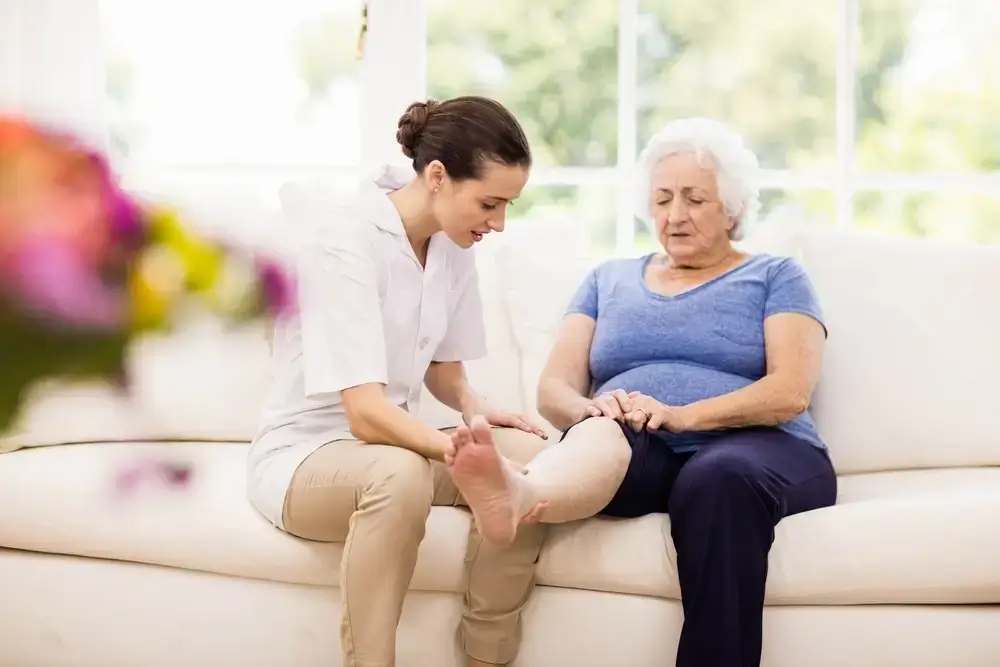
Knee pain often starts in a predictable way. A run feels fine at first, then pain builds. Stairs start to sting. Downstairs feels worse than upstairs. Squats feel uncomfortable. Many people in Mississauga search for a “Mississauga osteopath” when knee pain limits training, walking, or daily errands.
Knee pain rarely comes from the knee alone. Running and stairs load the knee, but the hip, ankle, foot, and pelvis control how that load spreads. A Mississauga osteopath assesses movement patterns, joint mechanics, and tissue sensitivity. Care often includes hands-on treatment plus a simple plan to improve control and reduce overload.
This guide covers common knee pain patterns from running or stairs, simple movement checks you can do at home, warning signs to take seriously, and what to do next. This guide also explains when to book with Mississauga Osteopathy Clinic.
Why running and stairs trigger knee pain
Running repeats the same movement thousands of times. Stairs load the knee more than level walking, especially during descent. When strength, mobility, or control falls behind demand, the knee often becomes the loudest signal.
Common drivers in Mississauga runners include:
- Fast increases in weekly mileage
- More hills or speed work without gradual build
- New shoes that change load patterns
- More treadmill running with limited variation
- Long desk hours with stiff hips and weak glutes
- Weak calf endurance and limited ankle mobility
- Old injuries that change stride
At Mississauga osteopath we focuses on load management first. This prevents flare-ups while you rebuild capacity.
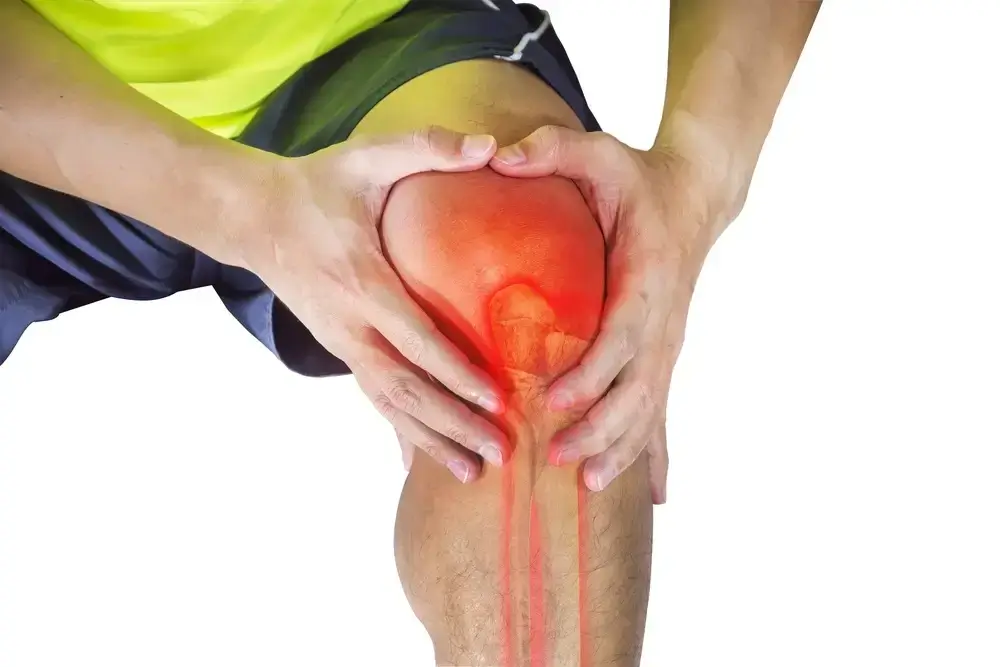
Common knee pain patterns from running or stairs
Pattern 1. Front of knee pain, often called runner’s knee
This often shows up around or behind the kneecap. Stairs, squats, and downhill running often feel worse.
Common signs:
- Pain during stairs, especially downhill
- Pain during squats or sitting with bent knees
- Stiffness after long sitting
Pain that warms up, then returns later
Common drivers:
- Hip weakness and poor knee tracking
- Weak quad endurance
- Stiff ankles that force knee overload
- High downhill volume
Pattern 2. Outside knee pain, often linked to IT band irritation
Pain often sits on the outside of the knee. Pain often starts after a certain distance, then ramps up.
Common signs:
- Sharp pain on the outside of the knee during running
- Pain starts at a predictable time or distance
- Downhill running worsens symptoms
- Tenderness along the outer thigh
Common drivers:
- Stride pattern and load spikes
- Hip control issues, especially glute med endurance
- Sudden volume increases
- Hills and cambered roads
Pattern 3. Inner knee pain
Pain often sits along the inside joint line or just below it. This can come from overload, poor foot mechanics, or joint irritation.
Common signs:
- Pain during stairs or twisting
- Pain during longer walks
- Tenderness on the inside of the knee
- Stiffness in the morning or after sitting
Common drivers:
- Foot collapse and poor control
- Hip rotation limits
- Strength imbalance between inner and outer thigh
- Overuse with poor recovery
Pattern 4. Pain below the kneecap, often linked to patellar tendon load
This often affects runners who do speed work, jumps, or heavy squats.
Common signs:
- Pain at the tendon below the kneecap
- Pain during stairs, jumping, or sprinting
- Stiffness at the start of activity
- Pain improves during warm-up, then returns later
Common drivers:
- Load spikes in speed and plyometrics
- Weak quad and calf tendon capacity
- Poor landing mechanics
- Fatigue and poor sleep
Pattern 5. Back of knee tightness
This can relate to hamstring overload, calf tightness, or joint mechanics.
Common signs:
- Tightness during running, especially when stride length increases
- Pain during full knee bend
- Swelling or fullness behind the knee in some cases
Common drivers:
- Hamstring fatigue and weakness
- Calf tightness and limited ankle motion
- Gait compensation from hip or foot issues
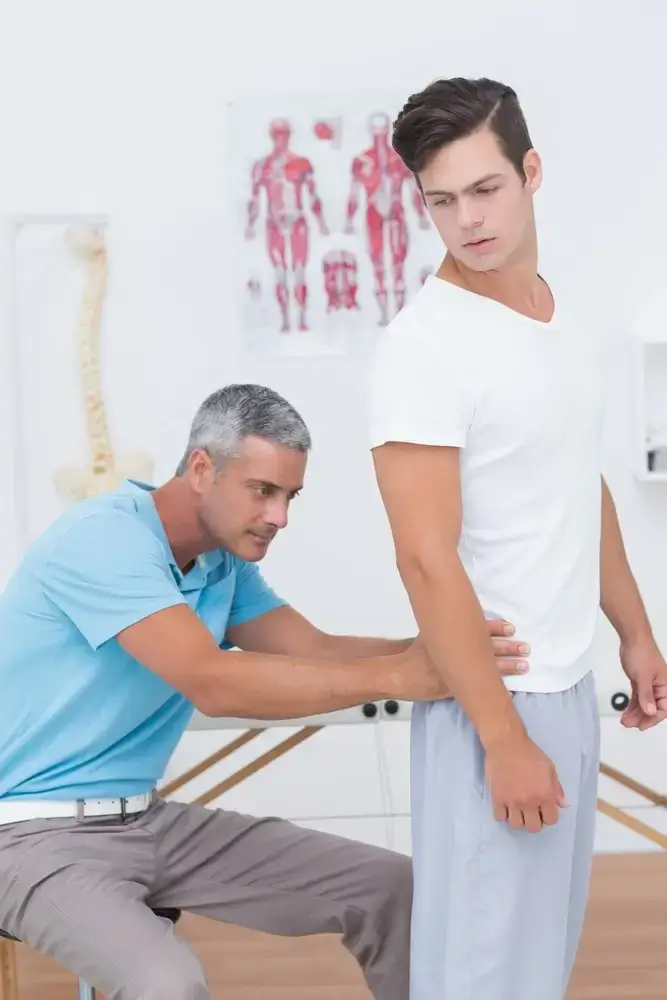
A Mississauga osteopath uses testing to identify which pattern fits you best. The plan changes based on the pattern.
Warning signs that need medical assessment
Seek medical assessment when you notice:
- A fall or twist with immediate swelling
- A pop with inability to continue activity
- Knee locking, catching, or giving way
- Large swelling that rises quickly
- Redness, warmth, fever, or signs of infection
- Inability to bear weight
- Calf swelling, redness, or sudden shortness of breath
These signs require prompt medical review.
Simple movement checks you can do at home
These checks help you understand patterns. Stop if pain spikes sharply. Do not force range.
Check 1. Stair test
Walk up and down a short flight of stairs.
Note:
- Does pain increase more on the way down
- Does pain sit in the front, inside, or outside
- Does one knee collapse inward
Pain on the way down often points to control and load tolerance issues.
Check 2. Single-leg squat to a chair
- Stand in front of a chair.
- Lower slowly on one leg until you touch the chair, then stand back up.
- Do 3 slow reps per side.
Watch for:
- Knee collapsing inward
- Hip dropping
- Foot arch collapsing
- Pain at the front of knee
A knee that moves inward often signals hip control and foot control issues.
Check 3. Step-down test
Stand on a low step.
- Slowly tap the heel of the other foot to the floor, then return.
- Do 5 slow reps per side.
Watch for:
- Pain during the lowering phase
- Wobbling at the hip
- Knee drifting inward
- Foot turning out to compensate
This test often reproduces runner’s knee patterns.
Check 4. Ankle mobility wall test
Face a wall.
- Place one foot a few inches away.
- Keep heel down and drive knee toward the wall.
- Move foot back until you find the farthest distance where the knee still touches the wall.
Limited ankle mobility often increases knee load during stairs and running.
Check 5. Single-leg calf raise endurance
Hold a wall for balance.
- Do slow calf raises on one leg.
- Count reps until form breaks.
Low calf endurance often shows up in runners with knee pain because the calf helps control landing forces.
When to book a Mississauga osteopath for knee pain
Book with a Mississauga osteopath when:
- Pain lasts more than 2 weeks
- Pain returns every time you run
- Stairs cause pain daily
- You see knee collapse during single-leg tests
- You feel swelling after activity
- You feel pain that spreads or changes location
- You want to return to running safely with a plan
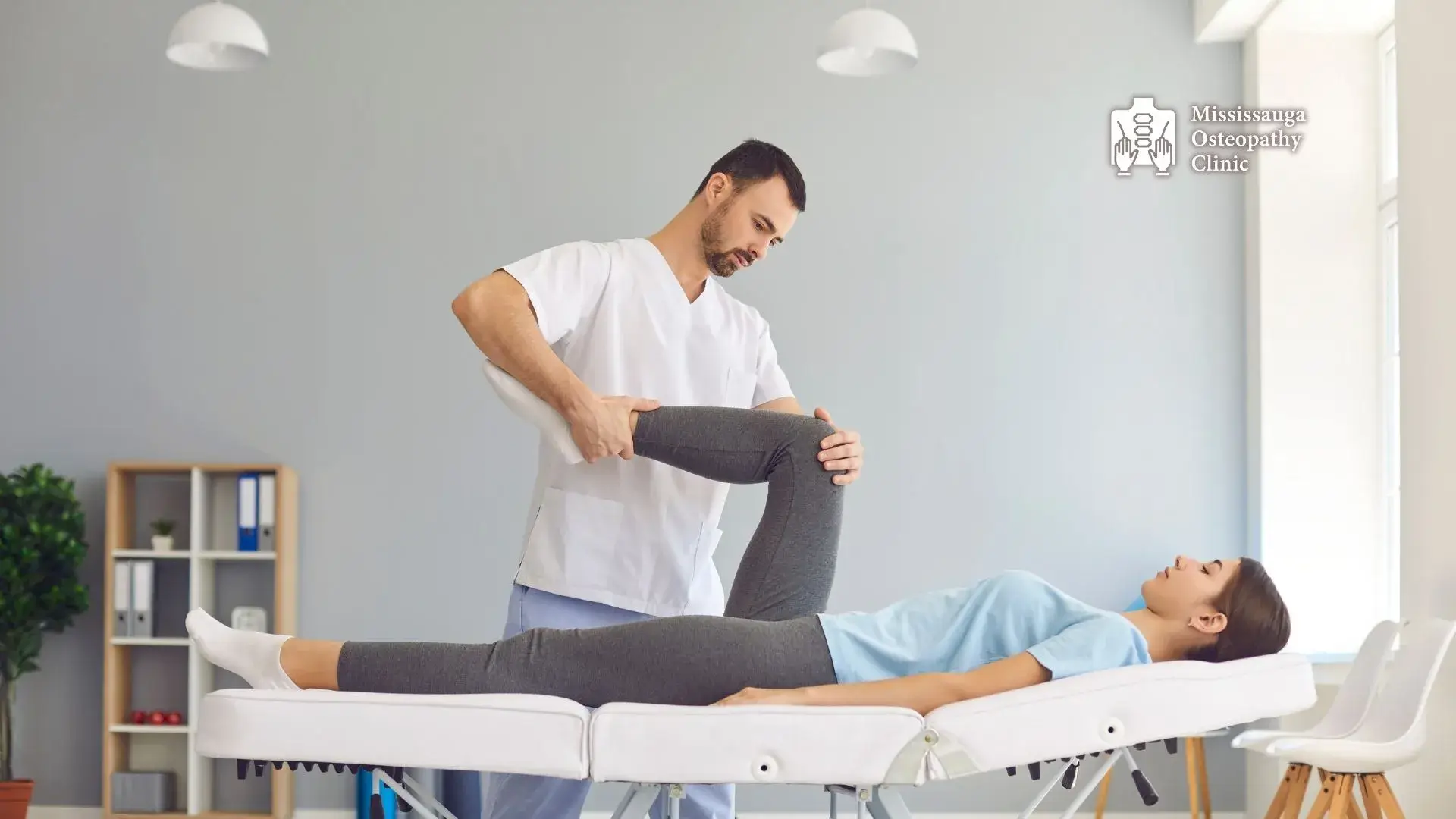
Mississauga Osteopathy Clinic can assess hip, knee, ankle, and foot mechanics. This helps identify the main driver and reduces guesswork.
How a Mississauga osteopath assesses knee pain
A Mississauga osteopath often checks:
- Foot and ankle mobility, including dorsiflexion
- Hip rotation and hip strength endurance
- Knee joint mobility and tissue sensitivity
- Patellar tracking and quad control
- Running history, mileage changes, shoes, and terrain
- Single-leg control during step-down and squat patterns
The clinic then builds a plan based on your pattern, your goals, and your schedule.
How osteopathic treatment helps knee pain patterns
Treatment often targets the chain that controls knee load.
Hands-on care often aims to:
- Reduce tissue guarding in quads, calves, and hip muscles
- Improve ankle and hip motion when stiff
- Improve knee joint mechanics when restricted
- Reduce irritation around overloaded tissues
Home plan often aims to:
- Build hip and quad endurance
- Improve single-leg control
- Restore ankle mobility
- Adjust running volume and terrain
- Improve cadence or stride habits when needed
A “Mississauga osteopath” provides clear markers for progress, such as pain-free stairs, improved step-down control, and longer run tolerance.
Common mistakes that prolong runner knee pain
Avoid these:
- Pushing through sharp pain
- Doing high-volume stretching without strength work
- Changing shoes and form without a plan
- Returning to hills and speed too early
- Ignoring ankle and hip mobility limits
Progress comes from graded load and better control, not from pain tolerance.
When to book at Mississauga Osteopathy Clinic
If knee pain from running or stairs keeps repeating, book with Mississauga Osteopathy Clinic. An assessment will identify the pattern driving overload. You leave with simple movement steps and a clear return-to-running plan.
Mississauga Osteopathy Clinic
https://www.mississaugaosteopathyclinic.com/